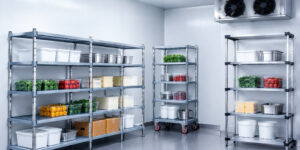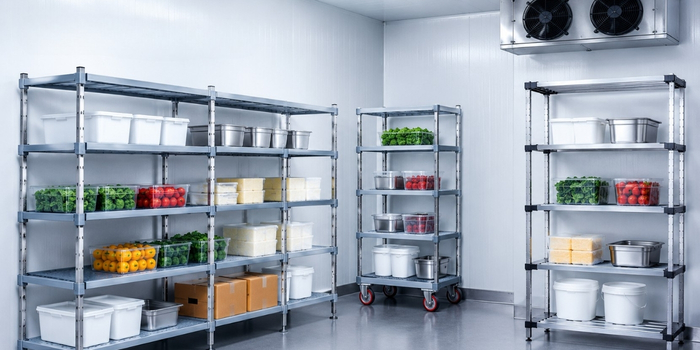
A cold room works harder than almost any other space in a food business. Cold air, constant moisture, harsh cleaning chemicals and heavy stock all attack your equipment every single day. Shelving takes the brunt of that punishment, yet many owners treat it as an afterthought. At Mantova, we see the results of that mistake often: rusted uprights, sagging shelves and costly replacements. Durable cold room shelving solves these problems.
It protects your stock, supports your food safety obligations and saves money over time. Moreover, it suits Australian conditions, from humid Queensland kitchens to salty coastal cafes. This guide explains the key benefits, shows who gains the most and helps you buy with confidence.
Why Cold Room Shelving Differs from Standard Shelving
Standard shelving belongs in a dry storeroom. A cold room presents a completely different environment. Temperatures sit between 0°C and 5°C, humidity stays high and condensation forms constantly. Furthermore, staff wash the shelves regularly with sanitizers that strip weak coatings.
Under these conditions, ordinary shelving fails fast. Cheap powder coatings chip, and rust then spreads beneath the surface. Chipped coatings also create crevices where bacteria hide. Consequently, a shelf that looked fine in the warehouse can become a food safety risk within a year or two.
So what makes shelving “durable” in a cold room? Look for corrosion-resistant materials, welded or sealed joints, smooth cleanable surfaces and tested load ratings. Shelving that meets these four criteria will last far longer than a bargain alternative.
Benefit 1: Superior Corrosion and Moisture Resistance
Moisture drives most shelving failures. Therefore, the material you choose matters more than any other decision.
Stainless steel offers the best long-term performance. Grade 304 handles most indoor cold rooms well. However, grade 316 contains molybdenum, which resists chloride attack, so coastal businesses should choose it. Salt air drifts into kitchens and cold rooms along the Australian coastline, and it attacks lesser grades.
Polymer shelving never rusts. It also resists chemicals and wipes clean in seconds. Many seafood retailers and florists prefer it for that reason.
Epoxy-coated wire costs less and performs adequately in lighter-duty settings. Nevertheless, the coating can chip over time, so inspect it regularly.
Galvanised and powder-coated steel suit dry storage better than cold rooms. In high humidity, these finishes break down and rust appears quickly.
| Material | Corrosion resistance | Best suited to | Relative cost |
| 316 stainless steel | Excellent | Coastal and high-salt sites | High |
| 304 stainless steel | Very good | Most commercial cold rooms | Medium to high |
| Polymer | Excellent | Seafood, florists, wash-down areas | Medium |
| Epoxy-coated wire | Good (until chipped) | Light-duty storage | Low to medium |
| Galvanised steel | Fair | Dry storage only | Low |
Benefit 2: Better Food Safety and Compliance
Food safety sits at the heart of every food business. Durable shelving strengthens your position in three ways.
First, non-porous surfaces give bacteria nowhere to hide. Staff clean them quickly and thoroughly. Second, intact surfaces help you meet the Food Standards Code, including Standard 3.2.3, which requires food premises and equipment to stay clean and sanitary. Third, AS 4674 guides the design, construction and fit-out of food premises, and sturdy, cleanable shelving fits neatly within that framework.
In addition, durable shelving supports your HACCP plan. Staff can store raw and ready-to-eat foods on separate, clearly defined levels, and they can trust that the shelves will not contaminate stock with rust flakes or coating fragments. Council inspectors also notice damaged shelving immediately, so sound equipment helps you pass inspections with less stress. Always confirm current requirements with your local council or a food safety professional, because rules vary between states and territories.
Benefit 3: Long-Term Cost Savings
Price tags tell only part of the story. Total cost of ownership gives a clearer picture.
Consider a simple example. A business buys budget shelving for a modest sum, and it corrodes within three years. The owner replaces it, then replaces it again. Over ten years, those repeated purchases, along with installation labour and downtime, easily exceed the cost of one durable system. Meanwhile, the durable shelving keeps performing without fuss.
Durable shelving also reduces product loss. Collapsed shelves ruin stock, and rusty shelves force you to discard contaminated goods. Likewise, proper shelving keeps produce off the floor, which protects quality. Therefore, every dollar you invest in durability returns value through fewer replacements, less waste and smoother operations.
When you compare suppliers, ask about warranties and expected lifespan. A confident supplier backs its products with clear terms.
Benefit 4: High Load Capacity and Structural Strength
Cold rooms hold heavy items. Meat cartons, beverage kegs, dairy crates and produce boxes add up fast. Weak shelving bows under that weight, and eventually it fails.
Strong shelving carries rated loads safely and keeps its shape. As a result, staff work with confidence, and managers reduce workplace injury risks. Always check the safe working load per shelf and per bay, and never guess. Furthermore, spread heavy items evenly and place the heaviest loads on lower shelves for extra stability.
Benefit 5: Improved Airflow and Energy Efficiency
Refrigeration units consume significant power. Good shelving design helps them work efficiently instead of fighting against poor airflow.
Open wire and slatted shelves let cold air circulate freely around your stock. Consequently, temperatures stay even and your compressor runs less often. Leave gaps between shelving, walls and evaporator units, and avoid overloading shelves so tightly that air cannot move. These small steps lower energy bills and protect product quality at the same time.
Benefit 6: Flexibility and Space Optimisation
Every cool room has a different size and layout. Adjustable and modular shelving adapts to your space, so you waste less room. Moreover, you can raise or lower shelves as your stock changes.
Vertical space often goes unused. Tall uprights let you store more without expanding your footprint. Organise stock using first-in, first-out (FIFO) principles, and label each bay clearly. Later, when your business grows, you can add bays instead of replacing the entire system.
Benefit 7: Easy Cleaning and Maintenance
Clean shelving protects your customers and your reputation. Durable shelves tolerate regular wash-downs and approved sanitizers without degrading. Many systems also allow staff to remove shelves quickly for thorough cleaning.
Follow a simple routine:
- Weekly: Wipe down shelves and check for spills or residue.
- Monthly: Remove shelves, wash them thoroughly and inspect joints and coatings.
- Annually: Check uprights, feet and fixings for stability and wear.
Who Benefits Most?
Restaurants and commercial kitchens rely on daily stock rotation, so they need shelving that survives constant use and frequent cleaning.
Butchers and seafood retailers face heavy loads and aggressive moisture. Stainless steel or polymer shelving handles both.
Supermarkets and grocers manage large volumes. Modular systems help them scale storage efficiently.
Florists need humidity-tolerant shelving that will not stain or rust. Polymer works especially well here.
Pharmaceutical and medical facilities demand hygienic, stable storage, and smooth cleanable surfaces help them maintain strict standards.
Wineries and beverage distributors stack heavy cartons and kegs, so load capacity becomes the top priority.
Why Australian Conditions Matter
Australia’s climate varies enormously. Tropical humidity in Queensland and the Northern Territory accelerates corrosion. Salt air along the coast attacks metal surfaces. Meanwhile, extreme heat in inland regions forces cold rooms to work harder. Shelving designed for milder overseas climates often struggles here.
Local suppliers understand these challenges. They stock products suited to Australian conditions, cut shelving to custom sizes and deliver quickly to metro and regional areas. Mantova follows this local-first approach, so customers receive practical advice alongside quality products.
What to Look for When Buying
Use this checklist before you commit:
- Material and grade: Match the material to your climate and stock type.
- Load ratings: Confirm the safe working load per shelf.
- Compliance: Check that the shelving supports food safety requirements.
- Warranty: Read the terms carefully and compare them across suppliers.
- Custom sizing: Measure your cold room accurately before you order.
- Local support: Choose a supplier who offers advice, delivery and installation help.
Mantova helps businesses across Australia match these factors to their specific needs, which saves time and prevents costly mistakes.
Signs It’s Time to Replace Your Cold room Shelving
Watch for these warning signs:
- Visible rust, pitting or flaking coating
- Bowing or sagging shelves
- Mould or residue that cleaning cannot remove
- Wobbly or unstable uprights
If you spot any of these, act promptly. Delay increases the risk of stock loss, injury and failed inspections.
Key Points About Durable Cold Room Shelving
- Cold room conditions corrode standard shelving quickly.
- Stainless steel and polymer shelving resist moisture far better than bare or galvanised steel.
- Non-porous, smooth surfaces limit bacterial build-up and clean easily.
- Durable shelving supports HACCP plans and Food Standards Code requirements.
- Higher upfront costs often deliver lower total costs over ten years.
- Correct load ratings prevent sagging, collapse and stock loss.
- Open wire and slatted designs keep cold air moving, which reduces energy use.
- Adjustable and modular systems fit any cold room size and adapt as your business grows.
- Coastal, tropical and inland regions each demand different material choices.
- Local suppliers deliver faster, understand Australian standards and provide better after-sales support.
FAQs: About Durable Cold Room Shelving
What is the best material for cold room shelving in Australia?
Stainless steel offers the best all-round durability. Choose grade 304 for most indoor cool rooms and grade 316 for coastal sites where salt air accelerates corrosion. Polymer shelving also performs brilliantly in wet, high-chemical environments such as seafood and floristry. Epoxy-coated wire suits lighter budgets, but you must monitor the coating for chips.
How long does cold room shelving last?
Lifespan depends on material, climate and maintenance. Quality stainless steel or polymer shelving can serve a business for many years, often a decade or more, with regular cleaning. Cheap coated shelving may need replacement within two to three years in humid conditions. Ask your supplier for warranty details, because they reveal how much confidence the manufacturer places in the product.
Is stainless steel shelving worth the extra cost?
Yes, in most commercial settings. Stainless steel costs more upfront, but it avoids repeated replacements, reduces product loss and keeps surfaces hygienic. Over ten years, businesses typically spend less on stainless steel than on cheaper shelving that fails and needs replacing.
Can I use regular wire shelving in a cool room?
You should not use standard uncoated or lightly coated wire shelving. Moisture and condensation corrode it quickly, and chipped surfaces harbour bacteria. Instead, choose shelving specifically rated for cold and wet environments, such as epoxy-coated, polymer or stainless steel options.
What shelving do coastal Australian businesses need?
Coastal businesses in places like the Gold Coast, Perth, Sydney and Darwin should choose grade 316 stainless steel or polymer shelving. Salt-laden air attacks lower-grade metals, so the extra corrosion resistance pays off quickly.
Where can I buy cold room shelving with delivery across Australia?
Look for a local supplier who ships to both metro and regional areas and who offers custom sizing. Mantova distributors are across Australia and offers guidance on selecting the right system for your cold room. Always confirm delivery times and installation support before you order.
How much weight can cool room shelves hold?
Capacity varies by product, so always check the manufacturer’s rated safe working load. Many commercial shelves carry well over 100 kg each, but heavy-duty systems carry considerably more. Spread loads evenly, and keep the heaviest items on the lower levels.
How often should I clean my cold room shelving?
Wipe shelves down weekly, and complete a deep clean monthly. Remove shelves, wash them with approved sanitiser and inspect them for damage. Furthermore, clean up spills immediately to prevent bacterial growth and staining.
Does my business need council approval for cool room fit-outs?
Requirements vary by state, territory and council. Many councils review food premises fit-outs, and AS 4674 guides design and construction. Contact your local council or a food safety professional before you start work, so you avoid delays.
Conclusion: Find Your Durable Cold Room Shelving
Durable cold room shelving delivers far more than storage. It resists corrosion, supports food safety, carries heavy loads and improves airflow. In addition, it cuts long-term costs and adapts as your business grows. Australian conditions, from tropical humidity to coastal salt air, make quality even more important.
Choose best shelving materials carefully, check your load ratings and buy from a supplier who understands local needs. Browse Mantova’s range of cold room shelving or request a free quote today, and give your cold room the durable foundation it deserves.