Every Australian warehouse stores different stock, so every warehouse needs its own shelving plan. Yet many operators buy shelving first and think about inventory later. That approach wastes floor space, slows picking and creates safety risks. Instead, start with your stock. Mantova encourages businesses from Perth to Brisbane to profile their inventory first, because that single step shapes every other decision.
This guide shows you how to assess your inventory, match it to the right shelving and avoid expensive mistakes. Along the way, you will find 10 key points, a quick comparison table and local FAQs.
Start With Your Inventory, Not the Shelving
First, build a clear profile of what you store. Record the weight, dimensions, shape and packaging of each product group. Next, note any special needs, such as temperature control, fragility or hazardous classification.
Then examine how your stock moves. Count your SKUs, check your turnover rates and identify your picking method. A team that picks single items needs very different shelving from a team that moves full pallets with a forklift.
Finally, assess your building. Measure your ceiling height, check your slab strength and map your column spacing. In addition, confirm the reach of your forklifts or order pickers. Many Australian sheds have sloping or aging slabs, so check the floor before you plan tall racking.
The Main Types of Warehouse Shelving and Racking
Before you match shelving to stock, learn the main options.
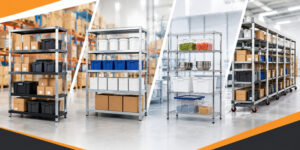
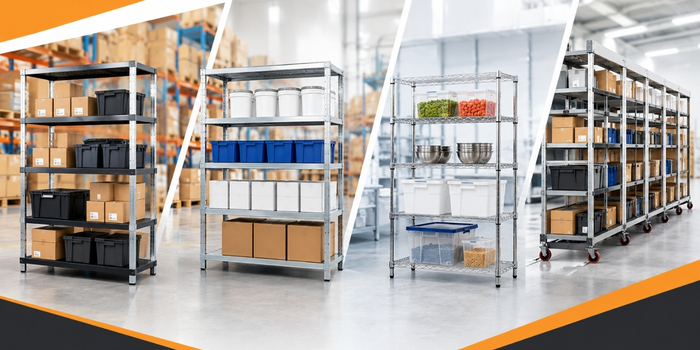
Boltless (rivet) shelving suits manual picking of light to medium loads. Workers assemble it quickly, and it adjusts easily.
Wire shelving gives you visibility, airflow and easy cleaning. It also lets sprinkler water pass through, which helps with fire safety.
Heavy-duty steel shelving carries bulkier parts and heavier cartons than standard boltless units.
Selective pallet racking gives direct access to every pallet. Therefore, it works well for businesses with many SKUs.
High-density systems, such as drive-in, push-back and pallet flow racking, store more pallets in less space. However, they restrict access to individual pallets.
Cantilever racking holds long and awkward loads on projecting arms, which keeps the front of the rack free from obstructions.
Carton flow shelving uses gravity to move cartons forward, so it supports first-in, first-out (FIFO) picking.
Mezzanines and multi-tier shelving add usable floor area by building upward.
Matching Shelving to Inventory Type
Now the practical part. The table below summarises the best fit for common inventory types, and the sections after it explain why.
|
Inventory type |
Best shelving option |
Key benefit |
|
Small parts and fasteners |
Boltless shelving with bins or drawers | Fast, accurate picking |
| Cartons and e-commerce stock |
Boltless shelving or carton flow |
Efficient order fulfilment |
|
Heavy or bulky items |
Heavy-duty steel shelving or pallet racking |
High load capacity |
|
Palletised goods |
Selective or high-density racking |
Space and access balance |
| Long items (pipe, timber, bar) |
Cantilever racking |
Safe, easy loading |
| Apparel and hanging goods |
Garment rails and wire shelving |
Crease-free storage |
| Cold storage and perishables |
Corrosion-resistant wire shelving |
Airflow and hygiene |
|
Hazardous materials |
Compliant containment shelving |
Spill control and safety |
| Irregular items (tyres, drums) | Specialty racks |
Stable, secure storage |
Small Parts and Fasteners
Small parts demand organisation more than raw strength. Choose boltless shelving with bins, dividers or drawers, and keep shelf depth shallow so pickers see everything at a glance. In addition, label each bin clearly. This setup cuts picking errors and saves time on every order.
Cartons and E-commerce Inventory
Online retailers handle thousands of small orders each day. Consequently, they need shelving that speeds up picking. Boltless shelving works well for slower lines, while carton flow shelving suits fast-moving products. Moreover, you can build pick modules with a mezzanine to double your pick-face area without expanding your building.
Heavy or Bulky Items
Heavy goods need a rated system, so check the beam capacity before you load anything. Heavy-duty steel shelving handles moderate weights, whereas pallet racking suits very heavy or palletised loads. Never guess a rating. Instead, ask your supplier for the capacity of each beam level and distribute the weight evenly across the shelf.
Palletised Goods
If you stock many different products, choose selective racking, because it gives you access to every pallet. On the other hand, if you store large volumes of the same product, consider push-back or drive-in racking. These systems save space, but they reduce selectivity. Therefore, weigh your SKU count against your available floor area.
Long Items
Pipe, timber, conduit and steel bar do not suit standard shelves. Cantilever racking solves the problem, since its arms support long loads without front uprights. Forklifts and side loaders can then load and unload safely. As a result, your team avoids awkward manual handling and damaged stock.
Apparel and Hanging Goods
Fashion and uniform suppliers need to protect fabric. Install garment rails for hanging stock and wire shelving for folded items. The open design improves airflow, and it keeps dust off your products.
Cold Storage and Perishables
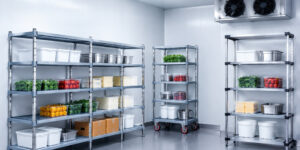
Cool rooms and freezers punish ordinary steel. Moisture, condensation and cleaning chemicals cause corrosion quickly. Therefore, choose corrosion-resistant finishes and wire decking that lets cold air circulate. This matters even more in humid regions such as Queensland and northern New South Wales.
Hazardous Materials
Chemicals and flammable liquids need purpose-built storage. Follow the relevant Australian Standards, such as AS 1940 for flammable and combustible liquids, and use containment shelving to control spills. Furthermore, keep your safety data sheets close to the storage area, and consult a qualified professional before you finalise a layout.
Irregular and Oversized Items
Tyres, drums and equipment need specialty racks. These systems cradle awkward shapes and prevent rolling or tipping. If your items do not fit a standard product, ask for a custom configuration.
Key Factors to Evaluate Before You Buy
Load capacity. Always check the capacity per shelf and per bay. Remember that an evenly spread load behaves very differently from a concentrated one.
Dimensions and layout. Plan your aisle widths around your equipment. In addition, make full use of your cubic space, and leave room for growth.
Material and finish. Compare steel gauges, decking types and coatings. For example, powder-coated steel suits dry indoor sites, while galvanised or stainless options suit wet or coastal environments.
Picking efficiency. Place your fastest movers in the “golden zone” between knee and shoulder height. Then slot slower lines on higher or lower levels.
Flexibility. Choose adjustable systems, because your product range will change. A reconfigurable system saves you from buying again in two years.
Total cost. Consider the purchase price, installation and maintenance together. A cheaper system often costs more over time.
Safety and Compliance Basics
Safety protects your people and your stock, and it protects your business from penalties. Under Australian WHS laws, you must manage the risks in your workplace, and that includes storage systems. Follow these basics:
- Display safe working load signs on every bay.
- Follow AS 4084, the Australian Standard for steel storage racking.
- Anchor your racking to the slab according to the manufacturer’s instructions.
- Keep aisles and fire exits clear, and respect sprinkler clearances.
- Inspect your racking regularly, and report damage immediately.
Importantly, treat any bent upright or damaged beam as a serious hazard. Unload the affected bay and call a qualified inspector straight away.
Common Mistakes to Avoid
First, many buyers choose on price alone. This often leads to under-rated shelving and costly replacements. Second, some operators ignore weight per shelf and overload their bays. Third, others mix very different inventory types on one system, which wastes space and increases risk. Finally, many skip layout planning altogether. A professional layout review costs little compared with a poorly designed warehouse.
A Simple Selection Checklist
- Audit your inventory by weight, size and packaging.
- Define your picking method and turnover rates.
- Measure your building and check your equipment.
- Shortlist shelving types for each inventory category.
- Verify capacities and compliance with AS 4084.
- Plan your layout and slotting strategy.
- Request quotes and compare the total cost.
Key Points: About Warehouse Shelving
- Profile your inventory before you look at any shelving catalogue.
- Calculate weight per shelf and per bay, not just per item.
- Match your shelving to your picking method: each, case or pallet.
- Measure your ceiling height, floor condition and aisle widths early.
- Choose cantilever racking for long items and selective racking for mixed pallets.
- Use wire decking when you need airflow, visibility or sprinkler penetration.
- Display safe working load signs on every bay.
- Follow AS 4084 and your state’s work health and safety (WHS) requirements.
- Slot your fast movers between knee and shoulder height.
- Leave room for growth, because your inventory will change.
FAQs: About Warehouse Shelving
What is the best shelving for a mixed-inventory warehouse in Australia?
A combination usually works best. Use boltless or heavy-duty shelving for cartons and small parts, selective racking for pallets and cantilever racking for long items. Therefore, divide your warehouse into zones by product type instead of forcing one system to handle everything. Mantova can help you map those zones before you commit to a purchase.
How much weight can warehouse shelving hold?
Capacity varies widely by system. Light-duty boltless shelving may carry around 100 to 300 kilograms per shelf, whereas heavy-duty shelving and pallet racking carry far more. However, you must always follow the manufacturer’s rated capacity for each beam level and bay. Never rely on a general figure.
Do I need to follow Australian Standards for warehouse racking?
Yes, you should. AS 4084 covers steel storage racking, and your state or territory WHS regulator expects you to manage storage risks. Consequently, buy racking from a supplier who understands the standard, and keep your inspection records up to date.
What is the difference between shelving and pallet racking?
Shelving suits manual picking of cartons and smaller items. Pallet racking, in contrast, supports palletised loads that forklifts handle. In short, choose shelving for hand-picked stock and racking for pallet-based storage.
How far apart should warehouse aisles be?
Aisle width depends on your equipment. Manual picking aisles can measure around one metre, while forklift aisles need considerably more, depending on the machine. Therefore, measure your equipment’s turning requirements first, then confirm clearances with your supplier.
How do I choose shelving for a coolroom or freezer in Australia?
Select corrosion-resistant shelving with wire decking. Wire lets cold air circulate and prevents ice and moisture from building up on solid surfaces. In addition, check that the finish suits your cleaning routine, especially in humid coastal areas.
Can I reconfigure my shelving when my stock changes?
Most boltless and adjustable systems allow easy reconfiguration. Simply move the beams to new heights or add levels. Nevertheless, always check the revised load ratings before you reload the bays.
Where can I get a shelving layout plan for my Australian warehouse?
Contact a local supplier who offers layout planning and site measurement. Mantova works with Australian businesses to match shelving to inventory, space and budget, so you can plan with confidence.
Final Thoughts
Choosing warehouse shelving does not need to feel complicated. First, understand your inventory. Next, match the right system to each product group. Then confirm your capacities, follow Australian Standards and plan your layout carefully. As a result, you will store more, pick faster and keep your team safe.
Ready to plan your warehouse? Contact Mantova team today, and build a shelving system that fits your stock, your space and your growth plans.