Picture this: it’s a Monday morning rush, your kitchen team is pulling stock for the lunch service, and someone notices a shelf sitting at a slight angle — again. You straighten it, move on, and forget about it. Sound familiar?
Most commercial kitchen operators across Australia push their cool room shelving well past its prime. It’s understandable. Replacing shelving feels like a big task, and when the kitchen is busy, “if it’s not broken, don’t fix it” becomes the default mindset. But here’s the problem — by the time it looks broken, it may already be costing you in food waste, failed inspections, and staff frustration.
After more than 50 years of manufacturing commercial cool room solutions, Mantova knows what well-performing shelving looks like — and what neglected shelving eventually does to a food business. So, if you’re unsure whether it’s time for an upgrade, here are seven clear signs to watch for.
Sign #1: You Can See Rust or Corrosion on the Surface
Rust is never just a visual problem in a cool room. When you spot orange-brown patches on your shelving frames or wire surfaces, that’s a signal that moisture and cold temperatures have already worked through the protective coating.
Cool rooms create the perfect environment for corrosion. The consistent humidity, temperature fluctuations during loading, and regular cleaning with water all accelerate the process. Surface rust, in its early stages, can sometimes be managed with maintenance. However, once corrosion penetrates the structural steel or spreads across shelf surfaces, there’s no coming back from it.
From a food safety perspective, rust particles can contaminate stored products — especially open packaging, fresh produce, and dairy items sitting on or near corroded surfaces. Additionally, pitted and rough metal surfaces become impossible to sanitise effectively, which creates a direct HACCP compliance issue.
Therefore, as soon as you notice corrosion spreading beyond small, isolated patches, it’s time to replace — not repair.
Sign #2: Your Shelves Are Bending or Sagging Under Load
A shelf that bows in the middle is telling you something critical: its structural integrity is already compromised. This happens for two main reasons — overloading beyond the rated weight capacity, or age-related fatigue in the shelf material itself.
Consequently, a sagging shelf is a liability. In a busy cool room, staff load and unload shelves quickly. A shelf that gives way under pressure doesn’t just cost you the product it drops — it can seriously injure the team member standing next to it.
Commercial cool room shelving — like Mantova’s M-SPAN and Real Tuff ranges — is engineered to carry between 150kg and 250kg per shelf when installed correctly. If your current shelving is deflecting visibly under normal loads, it no longer meets that standard.
Furthermore, sagging shelves restrict airflow within the cool room, which forces your refrigeration unit to work harder and drives up energy costs. Therefore, structural failure has a ripple effect far beyond the shelf itself.
Sign #3: Persistent Odours or Difficulty Cleaning
If your team is scrubbing shelves thoroughly during every clean but still noticing lingering smells or visible residue, the shelving surface itself is the problem — not the cleaning routine.
Over time, the protective coatings on commercial shelving break down from repeated exposure to cleaning chemicals, moisture, and temperature cycling. Once the surface degrades, micro-crevices form where bacteria, mould spores, and biofilm accumulate. At that point, no amount of cleaning product will achieve a genuinely hygienic result.
This is particularly concerning because Australian food safety regulations require food contact surfaces and storage equipment to be maintainable in a clean and sanitary condition. If your shelving can no longer meet that standard, it becomes a compliance risk — regardless of how hard your team works.
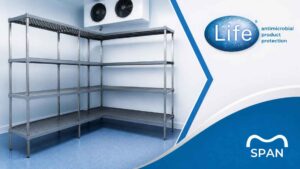
Mantova’s shelving range addresses this directly. The open-wire design promotes airflow and prevents moisture pooling, while the LIFE Antimicrobial Protection coating actively inhibits microbial growth at the surface level. In contrast, older shelving with deteriorated coatings offers none of these protections.
Sign #4: You’re Relying on Makeshift Fixes
Look around your cool room honestly. There shelves held in place with zip ties? Are feet missing and replaced with rubber blocks? Are clips cracked or bent but still in use?
Improvised fixes are a common response to minor shelving damage — and initially, they seem harmless. However, they signal a deeper problem: your shelving system is degrading faster than it’s being properly maintained.
Each workaround shifts load stress to other parts of the system. As a result, a missing post clamp doesn’t just affect one shelf — it changes how the entire unit distributes weight. Over time, this cascades into wider structural instability.
Moreover, improvised components are almost impossible to clean properly and often introduce non-food-safe materials into a food storage environment.
The good news is that Mantova supplies a comprehensive accessories range — including post clamps, shelf ledges, product stops, bullet feet, and castors — so genuine replacement parts are easy to source. However, if the number of repairs needed has grown beyond a few isolated components, a full system replacement is the more cost-effective and safer path forward.
Sign #5: Your Cool Room Has Changed But Your Shelving Hasn’t
Businesses evolve. Your menu changes, your supplier pack sizes shift, your team grows, and your stock volumes fluctuate with the seasons. Yet many operators are still running the same shelving configuration they installed years ago — even though it no longer fits how the business actually operates.
Shelving that once worked perfectly can become a daily bottleneck. Shelves placed too close together make it harder to rotate stock correctly, which increases food waste. Fixed configurations that can’t accommodate new equipment force awkward workarounds. Poor layout slows down kitchen prep and creates unnecessary movement for staff during peak service.
Therefore, if your cool room layout has changed significantly — or if your team is constantly working around the shelving rather than with it — that’s a sign the system needs a rethink, not just a clean.
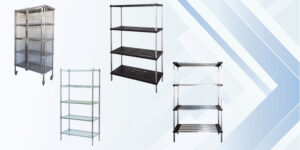
Mantova offers adjustable, modular, and mobile shelving configurations that adapt to the way your business actually works. The right system doesn’t just store product — it actively supports your kitchen’s workflow.
Sign #6: You’ve Failed (or Nearly Failed) a Food Safety Inspection
Australian food safety inspectors from local councils and state food authorities are trained to assess storage equipment during routine audits. Shelving condition is specifically on their checklist.
Inspectors look for rust, visible deterioration, inability to clean surfaces effectively, structural damage, and evidence of pest harbourage — all of which deteriorating shelving can contribute to. Consequently, a failed inspection doesn’t just result in a fine. It can mean a temporary closure order, a required corrective action plan, and reputational damage that follows your business online.
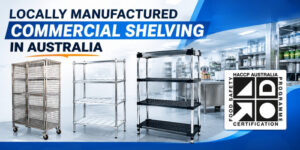
If your last inspection raised concerns about shelving, or if you’re heading into an audit feeling uncertain, don’t wait. HACCP-approved shelving — which Mantova manufactures and supplies across Australia — gives you documented evidence that your storage equipment meets the required standard. That’s a straightforward, defensible position to be in during any inspection.
Sign #7: Your Shelving Is More Than 10 to 15 Years Old
Even when shelving looks fine on the surface, age catches up with it in ways that aren’t always visible. Protective coatings thin out gradually. Joints loosen from thousands of load cycles. Micro-cracks form in plastic components. The cumulative effect is a system that’s significantly weaker and less hygienic than it appears.
Most commercial cool room shelving reaches the end of its reliable service life somewhere between 10 and 15 years, depending on the intensity of use and quality of maintenance. Beyond that point, the risk of sudden failure increases, and the cost of ongoing repairs begins to outpace the cost of replacement.
Proactive replacement — before something goes wrong — is always the smarter financial and operational decision. It lets you plan the upgrade on your terms, during a quieter period, rather than scrambling after a shelf collapse or failed inspection.
What to Look for When Choosing Replacement Cool Room Shelving
Once you’ve identified that replacement is the right call, choosing the right product matters enormously. Here’s what to prioritise:
Material and coating quality — Look for corrosion-resistant coatings such as zinc or epoxy-coated steel. Avoid uncoated wire shelving in humid cool room environments.
Load capacity — Confirm that the shelving you choose is rated for the actual weights you’ll be placing on it, with appropriate safety margin.
Compliance credentials — Prioritise HACCP-approved products and shelving with antimicrobial surface protection.
Adjustability and modularity — Shelving that can be reconfigured as your business grows is a better long-term investment than fixed systems.
Australian-made quality — Locally manufactured shelving is built to Australian standards, backed by accessible support, and designed for the Australian commercial kitchen environment.
For a full comparison of shelving ranges suited to cool rooms, cold rooms, and dry store environments, browse Mantova’s complete shelving catalogue at mantova.com.au.
Key Points to Know About Cool Room Shelving Replacement
Before we dive into the signs, here’s a quick-reference summary of what every Australian food business operator should know:
- Rust and corrosion are immediate food safety hazards, not just cosmetic issues.
- Sagging shelves indicate structural failure — not just wear and tear.
- Degraded surface coatings make shelves impossible to clean properly, creating bacterial hotspots.
- Missing or improvised components compromise the entire shelving system, not just one shelf.
- Cool room layout changes demand a shelving rethink — mismatched systems reduce efficiency significantly.
- Australian food safety inspectors actively check shelving condition during routine audits.
- Most commercial shelving has a practical service life of 10 to 15 years, after which hidden deterioration accelerates.
- Proactive replacement costs far less than the consequences of a failed inspection or product loss event.
- HACCP-approved, antimicrobial shelving exists and is accessible — there’s no reason to settle for less.
- Australian-made shelving outperforms cheap imports in durability, compliance, and long-term value.
Frequently Asked Questions
1. How long does cool room shelving last in a commercial kitchen in Australia?
Most commercial cool room shelving lasts between 10 and 15 years with regular maintenance and correct loading. However, the actual lifespan depends heavily on the intensity of use, the quality of the original product, and how consistently cleaning and inspection routines are followed. High-traffic kitchens — such as those in hotels, hospitals, or large restaurants — may see faster wear. Shelving exposed to harsh cleaning chemicals without appropriate protective coatings also deteriorates sooner. If your shelving is approaching the 10-year mark, it’s worth conducting a thorough inspection rather than assuming it’s still fit for purpose.
2. Can I repair cool room shelving instead of replacing it entirely?
Minor repairs — such as replacing individual clips, feet, or castors — are perfectly reasonable and often extend the life of an otherwise sound system. However, once corrosion is widespread, structural deflection is visible, or surface coatings have broken down across multiple shelves, repair becomes a false economy. At that point, you’re spending time and money on a system that’s still non-compliant and still degrading. Full replacement delivers a known load capacity, clean surfaces, and compliance credentials that a patchwork repair simply cannot.
3. What cool room shelving is HACCP approved in Australia?
HACCP Australia approval means that a shelving product has been independently assessed and certified as suitable for use in food handling environments. Mantova manufactures HACCP-approved shelving across several of its ranges, including the M-SPAN cool room, freezer, and dry store range. When purchasing replacement shelving, always ask your supplier for documented HACCP approval rather than assuming compliance based on appearance alone. HACCP certification gives you a defensible, documented record during food safety inspections by local council or state food authority officers.
4. How do I get a quote for cool room shelving in Australia?
Getting a quote from Mantova is straightforward. You can submit your shelving requirements directly through the online quoting tool at app.mantova.com.au. Alternatively, you can contact the Mantova team by phone on +61 2 8783 0744 or by email at sales@mantova.com.au. Mantova supplies across all Australian states and territories through a national distributor network, so regardless of whether your business is in Sydney, Melbourne, Brisbane, Perth, Adelaide, or regional Australia, there’s a local distributors who can assist.
5. What is the best cool room shelving for a small café or restaurant in Australia?
For smaller operations, adjustable post-style shelving with Real Tuff or wire shelves offers the best combination of flexibility and durability. These systems allow you to reconfigure shelf heights as your storage needs change, without purchasing a new unit. For cool rooms with limited floor space, Mantova’s mobile shelving and top track compactus options help maximise usable storage area. The right choice ultimately depends on your specific cool room dimensions, stock weights, and how frequently staff access different shelf levels throughout the day.
6. Is Australian-made cool room shelving better than imported alternatives?
In most cases, yes — particularly for commercial food service environments. Australian manufacturers produce shelving to local standards, use materials that suit the Australian climate and commercial kitchen environment, and back every product with accessible after-sales support. Imported shelving often cuts costs through thinner coatings, lighter gauge steel, or non-compliant materials that aren’t immediately obvious at the point of purchase. Over a 10 to 15-year service life, the difference in durability and compliance reliability is significant. Mantova has manufactured shelving in southern Sydney for over 50 years, specifically for the Australian hospitality and food service industry.
7. How do I know if my cool room shelving is compliant with Australian food safety standards?
Compliant commercial shelving should be in good structural condition, free from rust or visible deterioration, cleanable to a hygienic standard, and — ideally — HACCP certified. If your shelving is showing signs of corrosion, surface degradation, or structural damage, it likely does not meet the standard required under Australian food safety legislation. The best way to confirm compliance is to replace deteriorating shelving with a HACCP-approved product and maintain a documented cleaning and inspection schedule. Local council food safety officers and state food authority inspectors assess shelving condition as part of routine audits, so it’s worth treating this proactively rather than reactively.
Conclusion
Deteriorating cool room shelving rarely announces itself loudly. Instead, it gives you quiet signals — a bit of rust here, a sagging shelf there, an odour that won’t go away — until those signals become serious compliance, safety, or operational problems.
If you’ve recognised even two or three of the signs above in your current setup, it’s worth acting now rather than waiting. The cost of replacement is predictable and manageable. The cost of waiting — in product loss, failed inspections, or staff injuries — is not.
Get a free quote from Mantova today at www.mantova.com.au and find the right cool room shelving solution for your Australian food business.