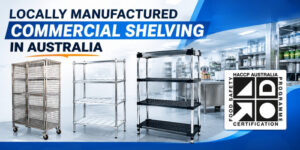
By Mantova | Australia’s Cold Room Shelving Experts Since 1969
Whether you run a busy café in Surry Hills, manage a food processing plant near Botany Bay, or operate a supermarket close to Sydney’s iconic Royal Botanic Garden, one thing holds your cold storage together — and it is not your refrigeration unit. It is your shelving.
Most Australian business owners invest heavily in refrigeration technology, yet overlook the single element that determines how well that technology actually performs: the shelving inside the cold room. The truth is, poorly arranged or low-quality shelving quietly drains your energy budget, puts your food safety compliance at risk, and costs you far more in spoilage and downtime than you realise.
In this guide, Mantova — Australia’s most trusted cold room shelving manufacturer since 1969 — breaks down exactly how proper shelving transforms cold room efficiency, reduces running costs, and keeps your business audit-ready under FSANZ and HACCP standards.
Why Cold Room Efficiency Matters More Than Ever for Australian Businesses?
Australia’s food service and hospitality industries operate under growing pressure. Energy prices continue to rise across New South Wales, Victoria, Queensland, and beyond. At the same time, Food Standards Australia New Zealand (FSANZ) and HACCP compliance requirements grow stricter each year.
From the fish markets near Pyrmont to the wholesale food distributors clustered around Sydney Airport at Mascot, cold room operators everywhere face the same core challenge: keeping perishable goods at the right temperature, in the right order, with the least possible energy waste.
Inefficient cold rooms create a ripple effect. Warm spots spoil stock. Blocked airflow forces compressors to overwork. Disorganised shelving slows down staff and causes picking errors. Ultimately, every one of these problems points back to shelving — and specifically, to shelving that was not designed for the job.
The Direct Link Between Shelving and Airflow
Here is the single most important thing to understand about cold room efficiency: your refrigeration system does not cool every individual item in the room. It cools the air, and that air then does the work. So, if your shelving blocks or restricts that air, your entire cold room underperforms — regardless of how expensive your refrigeration unit is.
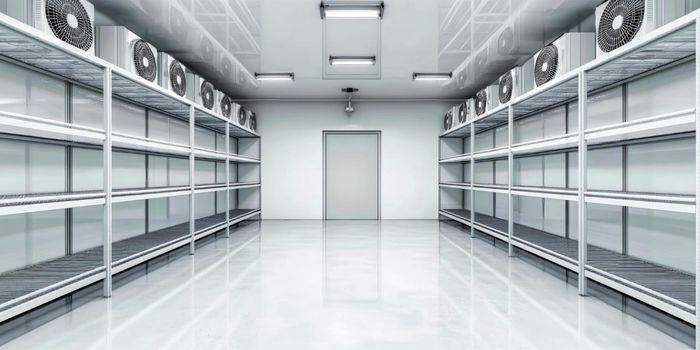
Wire and open-mesh shelving allows cold air to flow freely between shelf levels and around every product. In contrast, solid-panel shelving creates barriers that trap warm air in pockets. As a result, certain areas of the cold room stay warmer than others, which leads to uneven cooling, faster spoilage, and potential food safety violations.
Furthermore, poor airflow forces your compressor to work overtime to compensate. Over time, this extra strain significantly shortens the lifespan of your refrigeration equipment and inflates your electricity bill — a critical concern for businesses operating near Sydney’s central business district, where commercial energy costs run particularly high.
Therefore, choosing open, ventilated shelving is not simply an organisational decision. It is a direct energy efficiency strategy.
Proper Shelving Keeps You FSANZ and HACCP Compliant
Australian food businesses operate under the Food Standards Australia New Zealand (FSANZ) framework, which sets clear rules around food storage, handling, and facility hygiene. Additionally, HACCP (Hazard Analysis and Critical Control Points) certification is increasingly expected across hospitality, food manufacturing, and healthcare cold storage operations.
Proper shelving directly supports compliance in several practical ways:
Off-floor storage: Australian food safety regulations require that food products must never sit directly on the floor. Dunnage shelves solve this immediately — they elevate stock off the ground while keeping the floor fully accessible for regular cleaning and inspection.
Product separation: Shelving sections must clearly separate raw ingredients, ready-to-eat foods, and allergen-sensitive products. Adjustable, clearly labelled shelving makes this separation easy to maintain and easy to demonstrate during audits.
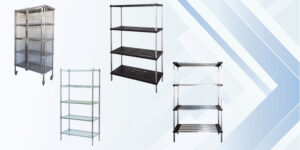
Surface hygiene: Shelving surfaces must resist contamination and allow thorough cleaning. Mantova’s HACCP-approved shelving range — including the popular Real Tuff shelves with built-in LIFE Antimicrobial Protection — actively inhibits bacterial, mould, and microbial growth directly within the shelf material itself.
Airflow maintenance: Evenly distributed cold air reduces condensation build-up on shelving surfaces, which in turn reduces the risk of bacterial contamination and cross-contamination between products.
Businesses from Darwin to Hobart — and everywhere in between, including food distributors operating near Melbourne Airport at Tullamarine — rely on compliant shelving to pass routine FSANZ and HACCP inspections with confidence.
Space Optimisation That Delivers Real Results
A well-shelved cold room can store significantly more stock than a poorly organised one of identical size. This matters enormously for Australian food businesses facing rising rents, tight floor plans, and growing delivery volumes.
Mantova designs its shelving systems to maximise both vertical and horizontal space. Taller multi-tier shelving systems — available in 3, 4, and 5-tier configurations — allow businesses to use every centimetre of wall height without expanding the room’s footprint. Consequently, operators store more product, reduce how frequently they need to reorder, and streamline the entire cold chain process.
Additionally, modular shelving configurations adapt to changing business needs. A restaurant near the famous Queen Victoria Building (QVB) in Sydney’s CBD, for example, can reconfigure its cold room shelving seasonally to accommodate changing menus — without purchasing entirely new systems.
Mobile shelving units provide yet another layer of flexibility. Mounted on lockable castors, these units allow staff to rearrange the cold room quickly during large deliveries, access hard-to-reach stock, and clean behind and beneath units with ease. As a result, mobile shelving effectively unlocks floor space that fixed racking simply cannot access.
Moreover, clear shelving organisation supports proper FIFO (First In, First Out) stock rotation. When staff can see and access all products easily, they rotate stock correctly, which dramatically reduces spoilage, food waste, and financial loss.
Choosing the Right Shelving Materials for Australian Cold Rooms
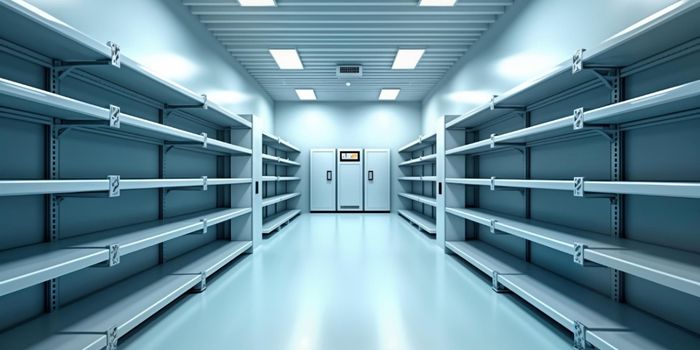
Not all shelving survives the cold room environment. Standard warehouse shelving or domestic-grade units crack, warp, corrode, and degrade quickly under constant exposure to low temperatures, high humidity, and frequent cleaning with commercial-grade sanitisers.
Australian cold rooms demand purpose-built materials. The most common and reliable options include:
Galvanised steel shelving: Galvanised steel frames with open-mesh panels offer exceptional strength, rust resistance, and durability in cold, damp environments. They handle heavy loads without flexing and maintain structural integrity through years of daily use.
Polymer and food-grade plastic shelving: High-quality ABS polymer shelves — such as Mantova’s Real Tuff range — offer superior corrosion resistance, complete dishwasher compatibility, and built-in antimicrobial protection. Importantly, these shelves do not crack or warp in sub-zero freezer environments, making them ideal for both cool rooms and hard freezer applications.
Powder-coated steel: Powder-coated frames resist moisture and corrosion effectively. Furthermore, smooth coated surfaces make cleaning faster and more thorough, reducing the labour time required to maintain hygiene standards.
Mantova manufactures all its shelving at its Southern Sydney facility using Australian recycled materials — a sustainability advantage that resonates strongly with modern Australian businesses committed to reducing their environmental footprint.
Energy Efficiency and Long-Term Cost Savings
Every time airflow inside your cold room improves, your refrigeration unit works less hard. And every time your refrigeration unit works less hard, your electricity bill drops. It is that straightforward.
Properly spaced, open-mesh shelving allows the cold room to reach its target temperature faster and maintain it more consistently. As a direct result, compressor cycles become shorter and less frequent. Over a 12-month period, this reduction in compressor activity translates into meaningful energy savings — particularly for large cold rooms in food processing facilities, hospitality venues, and supermarket distribution centres.
Furthermore, quality shelving significantly reduces maintenance costs. Cheap shelving corrodes, warps, and breaks down under cold room conditions, requiring frequent replacement. Purpose-built shelving, by contrast, lasts for years — even decades — with only basic maintenance. Routine cleaning, periodic inspections, and prompt replacement of worn components extend shelf life considerably and protect your initial investment.
Consider this: a standard 4-tier cool room shelving bay in Australia starts from around $301.95 + GST. Compared to the ongoing costs of spoiled stock, failed audits, inflated energy bills, and frequent shelving replacements, that upfront investment pays for itself many times over.
Industry Applications Across Australia
Proper cold room shelving delivers efficiency benefits across every industry that relies on controlled-temperature storage. Here is how different Australian sectors benefit:
Hospitality and food service: Restaurants, cafés, hotels, and catering companies — from beachside venues at Manly to rooftop bars overlooking Darling Harbour — rely on cold room shelving to organise ingredients, support HACCP compliance, and speed up kitchen prep. Adjustable shelves allow chefs to store everything from large trays to small condiment containers efficiently.
Supermarkets and grocery retail: High-volume grocery operations depend on sturdy, well-organised shelving to maintain product freshness, support FIFO stock rotation, and keep cool rooms accessible for rapid replenishment.
Food manufacturing and processing: Large-scale food producers operating near industrial areas such as Smithfield and Wetherill Park in Western Sydney require heavy-duty shelving capable of supporting substantial loads while meeting strict compliance standards.
Pharmaceutical and healthcare: Hospitals, aged care facilities, and pharmaceutical cold stores require shelving that maintains precise temperature conditions, supports contamination control, and meets healthcare-grade hygiene standards.
Wholesale and logistics: Cold chain logistics businesses operating near major transport hubs — including Sydney Airport at Mascot and the freight corridors around Port Botany — rely on modular, scalable shelving systems to handle fluctuating stock volumes efficiently.
Key Points: How Proper Shelving Improves Cold Room Efficiency
Before diving deeper, here are ten essential facts every Australian cold room operator needs to understand:
- Open-mesh wire shelving promotes free airflow, allowing cold air to circulate evenly around all stored products and eliminating dangerous warm spots.
- Solid shelving blocks airflow, which forces refrigeration compressors to run harder and longer, directly increasing energy bills.
- HACCP-approved shelving helps Australian businesses stay compliant with food safety audits and meet FSANZ requirements without extra effort.
- Dunnage shelving keeps food off the floor, satisfying Australian food safety regulations while keeping floor areas accessible for cleaning.
- Adjustable and modular shelving allows businesses to reconfigure storage layouts as stock volumes and product types change throughout the year.
- Proper shelf spacing reduces bacterial growth, as improved airflow limits condensation and moisture build-up on shelving surfaces.
- Vertical space utilisation through tall shelving systems dramatically increases cold room storage capacity without requiring more floor space or a larger room.
- Mobile shelving on lockable castors unlocks hidden floor space, simplifies deep cleaning, and allows quick layout changes during large deliveries.
- Antimicrobial surface coatings on high-quality shelving actively inhibit bacteria and mould growth, adding a critical layer of food safety protection.
- Investing in purpose-built cold room shelving delivers measurable long-term savings through lower energy bills, fewer maintenance callouts, and reduced stock losses.
Practical Tips for Shelving Improves Cold Room Storage Efficiency
Follow these steps to immediately improve your cold room’s efficiency:
- Choose wire or open-mesh shelving over solid panels wherever possible to maximise airflow throughout the room.
- Position all shelving away from cooling unit vents to prevent airflow disruption and uneven temperature distribution.
- Install dunnage shelves at floor level to keep products off the ground and satisfy FSANZ storage requirements.
- Use adjustable shelving systems so you can modify shelf heights to accommodate different product types and container sizes.
- Label shelving sections clearly to separate raw products, ready-to-eat foods, and allergens — this supports both efficient stock management and HACCP compliance.
- Add mobile shelving to tight spaces where deep cleaning and flexible layout changes are regular operational needs.
- Schedule regular inspections to check for corrosion, structural damage, or loose fittings that could compromise hygiene or safety.
- Clean shelving regularly with food-safe commercial sanitisers, and choose shelves — like Mantova’s Real Tuff range — that are fully dishwasher-compatible for fast, thorough hygiene maintenance.
FAQs: Shelving Improves Cold Room Storage Efficiency
1. What type of shelving is best for cold rooms in Australia?
Open-mesh wire shelving and polymer shelving with ventilated surfaces are the best choices for Australian cold rooms. These designs allow cold air to circulate freely, prevent moisture build-up, and meet FSANZ and HACCP hygiene standards. Mantova’s Real Tuff shelving and galvanised wire range both perform exceptionally well in cool rooms, cold rooms, and freezer environments across Australia.
2. Does cold room shelving need to be HACCP approved in Australia?
Yes, HACCP compliance is critically important for any food business operating in Australia under the FSANZ framework. HACCP-approved shelving confirms that the shelving material, surface finish, and design meet food safety management standards. Mantova is one of the very few Australian shelving manufacturers to hold HACCP approval across its entire range — giving businesses in Sydney, Melbourne, Brisbane, Perth, and Adelaide complete compliance confidence.
3. How does shelving affect energy efficiency in a cold room?
Shelving directly affects energy efficiency because it controls how air circulates inside the cold room. Open-mesh shelving allows cold air to reach every product evenly, which means the refrigeration unit reaches its target temperature faster and cycles less frequently. Solid shelving blocks this airflow, which forces the compressor to run harder and longer. Over time, this difference creates substantial increases in electricity consumption — a significant cost for any Australian business operating commercial refrigeration.
4. What is dunnage shelving and why is it required in Australian food businesses?
Dunnage shelving refers to low-profile shelf units that elevate food products off the floor. Australian food safety regulations under FSANZ require that food must never be stored directly on the floor in commercial storage environments. Dunnage shelves satisfy this requirement while keeping the floor beneath them accessible for regular cleaning and pest inspection. They are especially valuable in cool rooms where condensation and floor moisture are common challenges.
5. Can I use adjustable shelving in a cold room?
Absolutely. Adjustable shelving is one of the most practical investments for any Australian cold room. The ability to change shelf heights means you can accommodate different container sizes, seasonal products, and changing stock volumes without replacing the entire shelving system. Mantova’s modular shelving systems offer full height adjustability and require no tools for reconfiguration — saving both time and money for busy food businesses.
6. How often should I clean and maintain cold room shelving in Australia?
Australian food businesses should wipe down shelving surfaces at least weekly, with more frequent cleaning after spills — particularly from raw meat, seafood, or allergen-containing products. A thorough deep clean should occur monthly, and structural inspections should happen every quarter to check for corrosion, warping, or loose components. Mantova’s Real Tuff shelves are dishwasher-compatible, which makes fast, thorough cleaning simple and cost-effective.
7. What is the cost of cool room shelving in Australia?
Cool room shelving in Australia starts from approximately $301.95 + GST for a standard 4-tier bay, with costs varying based on size, material, and configuration. While upfront investment is important to consider, the long-term savings from reduced energy consumption, lower spoilage rates, and fewer compliance issues far outweigh the initial purchase cost. For businesses near major commercial precincts — from Parramatta Road to King Street Wharf in Sydney — comparing quality to total cost of ownership is the smarter calculation.
8. Is mobile shelving suitable for small cold rooms?
Yes, mobile shelving is particularly valuable in small and tight cold rooms. Units mounted on lockable castors allow you to slide shelves aside for deep cleaning, access stock stored at the back of the room, or quickly reconfigure the layout during large deliveries. For businesses operating compact cool rooms in dense urban areas — such as inner-city Melbourne or the laneways of Brisbane’s Fortitude Valley — mobile shelving often doubles the effective usable space.
9. What materials last longest in Australian cold room environments?
Galvanised steel and food-grade ABS polymer last the longest in Australian cold room conditions. Both materials resist corrosion, withstand low temperatures without cracking or warping, and tolerate frequent cleaning with commercial sanitisers. Mantova’s Real Tuff ABS polymer shelves additionally carry built-in LIFE Antimicrobial Protection, which actively reduces bacterial and mould growth on the shelf surface throughout the product’s lifespan.
10. Where can I buy HACCP-approved cold room shelving in Australia?
HACCP-approved cold room shelving is available through Mantova’s authorised distributors across all Australian states and territories, including New South Wales, Victoria, Queensland, Western Australia, South Australia, and Tasmania. Whether your business operates near Sydney’s busy George Street precinct, around the Docklands in Melbourne, or close to Perth Airport at Redcliffe, Mantova’s national distribution network delivers purpose-built cold room shelving Australia-wide.
Conclusion: Shelving Improves Cold Room Storage Efficiency
Your cold room is only as efficient as the shelving inside it. Proper shelving controls airflow, supports food safety compliance, reduces energy consumption, maximises usable space, and protects your stock — all at once. These are not abstract benefits. They translate directly into lower energy bills, fewer audit failures, less spoilage, and a more productive operation overall.
Mantova has helped Australian food businesses, hospitality operators, and cold chain logistics companies achieve all of these outcomes for over 55 years. From its Southern Sydney manufacturing facility, Mantova continues to design and produce HACCP-approved shelving systems that meet the real demands of Australian cold room environments — from sub-zero freezers to high-humidity cool rooms, and from single-site cafés to large-scale food processing operations.
Therefore, if your cold room is underperforming, start by looking at your shelving. Because in most cases, the solution is right there in front of you.
Ready to upgrade your cold room shelving? Contact Mantova today and discover Australia’s most trusted cold storage shelving solutions.
Mantova | Designed and Manufactured in Sydney, Australia | Serving Australian Businesses Since 1969