Australian warehouses face a tough squeeze right now. Industrial rents across Sydney, Melbourne, and Brisbane keep climbing, and businesses can’t simply lease more square metres every time stock grows. That’s why smart operators focus on storage efficiency instead of floor space alone. At Mantova, we help businesses across Australia rethink their warehouses so they store more, move faster, and spend less. From racking to shelving, the equipment you choose shapes how efficiently your warehouse actually runs. This guide walks you through practical, proven strategies that improve warehouse storage efficiency of any Australian business can apply, whether you run a small fulfilment centre in Fyshwick or a large distribution hub near Port Botany.
Why Warehouse Storage Efficiency Matters for Australian Businesses
Storage efficiency directly affects your bottom line. When you use space poorly, you pay for square metres that sit empty while stock overflows into aisles. You also slow down your pickers, increase safety risks, and struggle to scale during peak seasons like Christmas or EOFY sales.
Australian businesses face specific pressures that make this issue urgent. Industrial land near major hubs like Port Melbourne, Eastern Creek, and the Australia TradeCoast in Brisbane remains limited and expensive. Freight costs keep rising, and e-commerce continues to grow rapidly, which pushes more businesses to fulfil orders directly from their own warehouses rather than through retail stores. On top of that, Safe Work Australia enforces strict guidelines around racking, aisle clearance, and load limits, so poor storage planning can create compliance headaches as well as cost problems.
Mantova works with warehouse operators who want to solve these challenges without expanding their footprint. The strategies below reflect what actually works on the ground in Australian facilities.
Assess Your Current Storage Setup First
Before you change anything, you need to understand where your warehouse currently stands. Walk your facility and measure your cube utilisation, not just your floor space. Many warehouses use only 30–40% of their available vertical space, which means enormous storage capacity sits unused above head height.
Look for dead zones near loading docks, gaps between racking and shelving bays, and areas where stock has been dumped rather than properly stored. Track key metrics such as storage density (pallets per square metre), pick rate, and overall space utilisation percentage. These numbers give you a baseline, so you can measure improvement once you implement changes.
Optimise Your Warehouse Layout
Layout drives efficiency more than almost any other factor. A well-planned floor plan reduces travel time, speeds up picking, and prevents congestion.
Choose a flow-through layout when you handle high volumes of similar stock, since goods move in one direction from receiving to dispatch without backtracking. A U-shaped layout works better for smaller warehouses because it keeps receiving and dispatch close together, which reduces forklift travel distances.
Pay close attention to aisle width too. Narrow-aisle racking systems let you fit more storage into the same footprint, though they require specialised equipment like reach trucks. Wide-aisle layouts cost more in space but allow standard forklifts to manoeuvre freely, which speeds up operations in high-turnover facilities.
Zone your warehouse by product velocity. Store fast-moving items near dispatch points, so pickers spend less time walking. Place slow-moving stock further back, where the extra travel time matters less. If your business handles wholesale distribution, consider building in cross-docking zones, where incoming goods move straight to outgoing trucks without ever touching storage.
Choose the Right Racking and Shelving Systems for Your Stock
Not every product suits the same racking or shelving system. Mantova recommends matching your storage equipment to your actual stock profile rather than defaulting to one solution across the whole warehouse.
Selective pallet racking gives you direct access to every pallet, which suits businesses with diverse SKUs and moderate turnover. Drive-in or drive-through racking increases density significantly, since forklifts drive directly into the racking structure, though it works best for bulk stock with fewer SKU variations.
Push-back and pallet flow racking use gravity or rollers to move stock automatically, which suits high-volume FIFO operations. If your ceiling height allows it, install a mezzanine floor to double your usable space without expanding your building footprint at all.
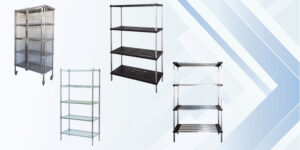
Shelving deserves just as much attention as racking, particularly if you handle smaller items, cartons, or mixed-case picking. Boltless shelving systems go up quickly and adjust easily as your stock profile changes, which suits growing businesses that don’t want to commit to a fixed configuration. Long-span shelving handles bulkier cartons and equipment, while steel or wire shelving units work well for smaller parts, retail overflow, and archive storage.
Mobile or compact shelving compresses your storage further by eliminating fixed aisles altogether, since units slide along tracks and open only where you need access. Mantova stocks a full range of shelving solutions built specifically for Australian warehouse conditions, so you can match the right unit to your load weight, item size, and pick frequency. Cantilever racking rounds out the picture for long or irregular items like timber, piping, or steel that standard shelving and pallet racking can’t accommodate.
Implement Smarter Inventory Management
Storage efficiency isn’t only about physical space. It’s also about how you manage the stock sitting inside that space.
Run an ABC analysis to categorise your inventory by value and turnover. “A” items move fast and deserve prime, easily accessible locations. “C” items move slowly and can sit further away. This simple exercise often reveals huge inefficiencies in current slotting arrangements.
Apply FIFO (First In, First Out) or FEFO (First Expired, First Out) principles, particularly if you handle food, beverage, or pharmaceutical products. These practices reduce waste and keep your stock rotation compliant with Australian food safety standards. Reduce overstock wherever possible, since excess inventory eats into both storage space and cash flow. Finally, switch from annual stocktakes to regular cycle counting, so you catch discrepancies early and maintain accurate records year-round.
Leverage Technology and Automation
Technology transforms warehouse efficiency faster than almost any physical change you can make. A Warehouse Shelving Management System gives you real-time visibility over stock locations, so you eliminate guesswork and reduce picking errors.
Barcode scanning and RFID tracking speed up receiving, put-away, and dispatch processes considerably. For larger operations, Automated Storage and Retrieval Systems (AS/RS) maximise vertical space while reducing labour costs, though they require significant upfront investment. IoT sensors add another layer of visibility, alerting you to stock levels, temperature conditions, or equipment issues in real time.
Australian SMEs don’t need enterprise-level automation to benefit here. Even a mid-tier WMS paired with basic barcode scanning delivers measurable efficiency gains without breaking the budget. We often advise smaller businesses to start with software improvements before investing in expensive automated hardware.
Prioritise Safety and Compliance
Efficiency means nothing if your warehouse isn’t safe. Safe Work Australia sets clear guidelines around racking, storage, and aisle clearance, and non-compliance puts both your staff and your business at risk.
Schedule regular racking inspections in line with the AS 4084 standard, which covers structural safety for steel storage racking. Display load capacity signage clearly on every racking bay, and train staff thoroughly on safe stacking heights and weight limits. A well-organised warehouse naturally reduces workplace injury risk too, since clear aisles and properly loaded racking prevent the collisions and falling stock incidents that cause most warehouse accidents.
Consider Cost-Effective Space Solutions
Before you sign a lease for additional warehouse space, explore cheaper alternatives first. Vertical expansion through mezzanines or taller racking often costs far less than leasing a bigger facility, and it avoids the disruption of relocating your entire operation.
Energy efficiency matters too, particularly as power costs continue rising across Australia. Upgrade to LED lighting, improve insulation, and consider solar panels if your warehouse roof allows it. These changes reduce operating costs while you improve storage.
If your business experiences seasonal spikes, outsourcing to a third-party logistics (3PL) provider might make more sense than permanently expanding your own facility. Weigh this option carefully against DIY optimisation, and consider bringing in a professional warehouse design consultant if your current layout feels genuinely maxed out.
Industry-Specific Tips For Improve Warehouse Storage Efficiency
Different industries need different approaches. Cold Room storage and food and beverage businesses should prioritise FEFO compliance, temperature-zoned racking, and rapid throughput to minimise spoilage. E-commerce and fulfilment centres benefit most from narrow-aisle racking, automated picking technology, and layouts optimised for single-item orders rather than bulk pallets.
Manufacturing and industrial suppliers typically need cantilever racking and heavy-duty shelving for raw materials and finished goods alike. Retail distribution centres, meanwhile, should focus on cross-docking, adjustable shelving for carton picking, and fast-moving zone placement to keep stores stocked without unnecessary warehouse dwell time.
Common Mistakes to Avoid
Many Australian businesses fall into the same traps when trying to improve storage efficiency. Overcrowding aisles creates both safety hazards and productivity bottlenecks, so resist the urge to squeeze in extra stock wherever it fits. Ignoring vertical space wastes enormous potential capacity that sits right above your existing racking.
Poor slotting decisions also hurt efficiency badly, particularly when popular items end up stored far from dispatch points. Using the wrong shelving for the job causes similar problems, since oversized units waste space on small items and undersized shelving buckles under loads it was never designed to carry. Finally, skipping regular audits means inefficiencies compound over time rather than getting caught and corrected early. We recommend reviewing your warehouse setup at least twice a year to stay ahead of these issues.
Key Points on Improve Warehouse Storage Efficiency
- Measure your current cube utilisation before making any changes.
- Choose a layout that matches your product flow, whether flow-through or U-shaped.
- Match your racking and shelving system to your actual stock profile, not a generic default.
- Use vertical space through mezzanines, taller racking, and adjustable shelving wherever possible.
- Apply ABC analysis to slot fast-moving stock closer to dispatch points.
- Follow FIFO or FEFO principles to reduce waste and maintain compliance.
- Choose boltless or long-span shelving for cartons and mixed-case picking to boost flexibility.
- Invest in a Warehouse Management System to gain real-time inventory visibility.
- Schedule regular racking and shelving inspections under the AS 4084 standard.
- Review your entire warehouse setup at least twice a year to catch inefficiencies early.
FAQs: Improve Warehouse Storage Efficiency
How can I improve storage efficiency in a small warehouse in Australia?
Small warehouses benefit most from vertical expansion and better slotting rather than physical expansion. Install taller racking or a mezzanine floor to use your ceiling height, then apply ABC analysis to place fast-moving stock near your dispatch area. Many small operators in areas like Marrickville or Moorabbin have doubled their effective storage capacity simply by reorganising existing space rather than leasing additional square metres.
What racking system works best for Australian warehouses with limited floor space?
Narrow-aisle pallet racking or mobile compact shelving typically works best when floor space is limited. These systems reduce the aisle width needed for forklift access, which frees up significantly more room for actual storage. Businesses near high-cost industrial precincts, such as those close to Port Botany or the Western Sydney industrial corridor, often choose these systems specifically to avoid paying for additional leased space.
Are there specific safety regulations for warehouse racking in Australia?
Yes, Safe Work Australia sets national guidelines for racking safety, and the AS 4084 standard covers structural requirements for steel storage racking specifically. Businesses must inspect racking regularly, display load capacity signage, and train staff on safe stacking practices. Non-compliance can result in fines and, more importantly, puts staff safety at serious risk.
How much does it cost to improve warehouse storage efficiency in Australia?
Costs vary widely depending on the changes you make. Simple improvements like better slotting or cycle counting cost little beyond staff time. Mid-range investments such as a Warehouse Management System typically range from a few thousand to tens of thousands of dollars depending on scale. Larger investments like mezzanine floors or automated storage systems can run into six figures, though they often pay for themselves through reduced leasing costs and improved throughput over time.
Should I outsource to a 3PL provider instead of improving my own warehouse?
It depends on your volume and growth pattern. Businesses with steady, predictable stock levels usually benefit more from optimising their own warehouse, since it keeps costs lower long-term. Businesses with highly seasonal demand, such as those spiking around Christmas or major sales events, often find that a 3PL provider offers more flexibility without the cost of maintaining extra space year-round.
What’s the fastest way to free up space in an existing Australian warehouse?
The fastest wins usually come from removing dead stock, reorganising slotting based on product velocity, and using vertical space that currently sits empty. Most warehouses can free up 15–20% of usable space within a few weeks simply by clearing obsolete inventory and tightening up how existing racking and shelving is used, well before any structural changes or new equipment come into play.
What’s the difference between racking and shelving, and which one do I need?
Racking generally handles palletised loads and heavier goods, moved by forklift, while shelving suits smaller items, cartons, and hand-picked stock that staff access manually. Most Australian warehouses use a mix of both, since a single system rarely covers every product type efficiently. If you’re unsure which configuration suits your stock, Mantova can assess your current setup and recommend the right combination of racking and shelving for your specific operation.
Where can I buy quality warehouse shelving in Australia?
Businesses across Sydney, Melbourne, Brisbane, and regional Australia can source durable, Australian-standard-compliant shelving through Mantova. We supply boltless, long-span, and mobile shelving systems suited to warehouses, retail stockrooms, and industrial facilities, so you get equipment built to handle local conditions and comply with Safe Work Australia requirements from day one.
Conclusion: Ready To Improve Warehouse Storage Efficiency
Improving storage efficiency doesn’t require a complete warehouse rebuild. It requires a clear-eyed audit, smarter layout decisions, the right racking and shelving systems, better inventory management, and a genuine commitment to safety and compliance. Start with an honest assessment of your current space, then apply the strategies above step by step.
Mantova helps Australian businesses turn cramped, inefficient warehouses into streamlined operations that scale with demand. If you’re ready to take the next step, book a warehouse storage assessment with our shelving distributor and see exactly where your facility can improve.