Australian businesses face a tough reality today: commercial space costs keep climbing, and floor space keeps shrinking. Walk through Sydney’s CBD near George Street or pass by Melbourne’s Bourke Street Mall, and you’ll notice how tightly packed offices, retailers, and warehouses have become. This squeeze pushes business owners to rethink how they store everything from stock to sensitive records. That’s exactly where moving shelving systems step in, and it’s why more businesses now turn to Mantova for smart, space-saving storage solutions.
This guide breaks down why moving shelving systems matter, who benefits most, and what your business should consider before investing in one.
What Are Moving Shelving Systems?
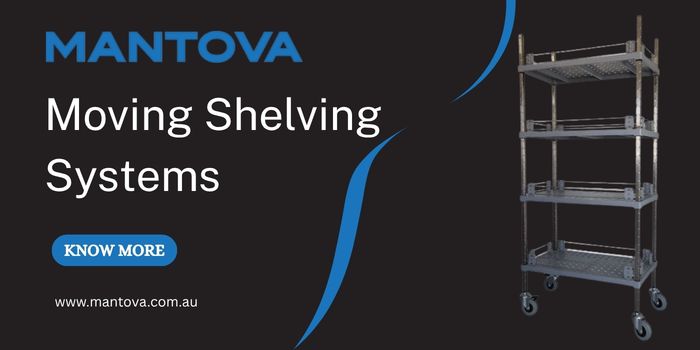
Moving shelving systems, also called mobile shelving or compactus units, sit on tracks built into the floor. Unlike static shelving, which stays fixed in one spot and wastes aisle space, mobile shelving slides sideways. Users simply push or operate a handle, and the unit glides along the rail, opening only the aisle they need at that moment.
Three main types exist:
- Manual systems – operated by hand, ideal for lighter loads and smaller budgets.
- Mechanical-assist systems – use a wheel or handle mechanism to shift heavier shelving with less effort.
- Electronic/powered systems – move at the push of a button, suiting high-volume facilities like hospitals or government archives.
Mantova designs and supplies all three types, helping Australian businesses match the right system to their specific storage demands.
The Space Problem Australian Businesses Face
Commercial rent across major Australian cities continues to rise sharply, and business owners feel this pressure every single quarter. Many companies simply can’t afford to lease extra square metres just to fit more filing cabinets or stock shelves. At the same time, paperwork, inventory, and compliance records keep piling up, and businesses must find smarter ways to store more within the same footprint.
This pressure explains why moving shelving systems have grown so popular. They solve the space problem directly by removing wasted aisle space and packing more storage into a smaller area.
Key Benefits Of Moving Shelving System
Australian businesses adopt moving shelving systems for several compelling reasons:
- Maximised storage density – Mobile shelving doubles storage capacity within the same floor area compared to static shelving.
- Lower overheads – Businesses avoid the high cost of leasing additional premises just for storage.
- Faster retrieval – Staff locate files, stock, or equipment quickly, since everything stays organised and accessible.
- Stronger security – Many systems include lockable units, restricting access to sensitive records.
- Better compliance – Healthcare providers, legal firms, and government bodies meet Australian record-keeping obligations more easily.
- Improved workplace safety – Wider single aisles (rather than multiple narrow ones) reduce trip hazards and clutter.
- Long-term durability – Quality systems, like those engineered by Mantova, last for decades with minimal upkeep.
- Customisable configurations – Shelving height, depth, and track length adjust to suit unique floor plans.
- Sustainability gains – Businesses delay or avoid costly extensions, reducing construction waste and energy use.
- Scalability – As a business grows, additional shelving units integrate into the existing track system without major disruption.
Industries Leading the Shift
Several Australian industries lead the charge toward mobile shelving adoption.
Healthcare and aged care facilities store patient records and pharmaceuticals securely while saving valuable clinical space. Legal and government sectors archive enormous volumes of files and must comply with strict retention laws. Retail and logistics businesses pack warehouses near transport hubs more efficiently, fitting more inventory into existing distribution centres. Education institutions, including university libraries, free up reading and study space by compacting book storage. Even museums and galleries, similar to those found around Federation Square in Melbourne, rely on mobile shelving to protect and organise valuable artefacts within limited backroom space.
Real-World Value: Cost vs ROI
Businesses that compare the upfront cost of mobile shelving against leasing extra premises quickly see the financial sense. Leasing additional space in a CBD location, whether near Hyde Park in Sydney or Queen Victoria Market in Melbourne, costs significantly more over time than installing a one-off shelving system. Furthermore, staff spend less time searching for items, which boosts overall productivity. Over a five-to-ten-year period, most businesses recover their investment through saved rent and improved efficiency alone.
What To Consider Before Choosing A Moving Shelving System
Before investing, businesses should assess a few key factors that directly affect performance, safety, and long-term value. Each point below helps decision-makers compare options clearly and choose a system that truly fits their premises.
- Check the floor’s load-bearing capacity – Mobile shelving carries significant weight once fully loaded, so businesses must confirm the existing floor structure can handle the combined weight of the units and stored items.
- Decide between manual, mechanical-assist, or electronic systems – Businesses should match the system type to usage frequency, staff capacity, and available budget, since each option suits different operational demands.
- Choose a trusted Australian supplier – Businesses should select a supplier with proven installation experience, strong after-sales support, and a track record across local industries.
- Request a thorough site assessment – A proper site visit identifies floor conditions, ceiling height, and layout constraints before installation begins, preventing costly surprises later.
- Prioritise custom design over generic units – Businesses get better long-term value when they choose configurations tailored to their exact storage needs rather than one-size-fits-all shelving.
- Confirm ongoing maintenance support – Businesses should ask suppliers about maintenance plans, since regular servicing extends the lifespan of tracks, mechanisms, and shelving frames.
- Plan for future growth – Businesses should select a flexible system that expands alongside the business, allowing additional units to integrate into the existing track without major disruption.
- Review warranty terms carefully – Businesses protect their investment when they understand exactly what each warranty covers and for how long.
- Assess accessibility for staff – Businesses should consider how often staff will operate the shelving daily, since this frequency influences the choice between manual and powered systems.
Mantova guides Australian businesses through every one of these steps, offering site assessments, custom design, and ongoing maintenance that together ensure each system performs reliably for years to come.
FAQs: About Moving Shelving System
What is the difference between mobile shelving and static shelving in Australian warehouses?
Static shelving stays fixed in place and requires a separate aisle for every row, wasting significant floor space. Mobile shelving, by contrast, slides along floor-mounted tracks, so only one aisle needs to stay open at any time. This difference alone allows Australian warehouses and offices to store up to twice as much within the same footprint, making mobile shelving the more space-efficient choice for businesses dealing with high commercial rent.
Are moving shelving systems suitable for small Australian businesses, not just large warehouses?
Yes, small businesses benefit just as much, if not more, since they often operate within tighter premises in suburban or CBD locations. A small legal practice, medical clinic, or retail store can install a compact mobile shelving unit to free up valuable floor space without needing to relocate or expand. Suppliers like Mantova design systems scaled specifically for smaller footprints.
How much does it cost to install a moving shelving system in Australia?
Costs vary depending on system type, size, and customisation level. Manual systems generally cost less than electronic ones, while larger installations with higher load capacities increase the price. However, most businesses recover this cost within a few years through savings on rent and improved staff efficiency, making it a worthwhile long-term investment rather than a simple expense.
Do moving shelving systems meet Australian workplace safety standards?
Reputable suppliers design and install mobile shelving systems in line with relevant Australian workplace health and safety requirements. Features such as anti-tip mechanisms, safety sensors on electronic units, and proper floor anchoring all reduce risk. Businesses should always confirm compliance documentation with their chosen supplier before installation to ensure the system meets current safety obligations.
Which Australian industries use moving shelving systems the most?
Healthcare providers, legal firms, government departments, educational institutions, and retail or logistics warehouses use moving shelving systems most frequently. Each industry faces strict record-keeping rules or high-volume storage needs, and mobile shelving helps them organise, secure, and retrieve items efficiently while staying compliant with Australian regulations around data and document retention.
Can moving shelving systems be customised for unique floor plans in older Australian buildings?
Yes, most suppliers, including Mantova, offer custom configurations to suit irregular floor plans, low ceilings, or heritage building constraints common in older Australian commercial properties. Track length, shelving height, and unit depth all adjust during the design phase, allowing businesses operating from heritage buildings or unconventional spaces to still benefit from mobile shelving’s space-saving advantages.
How long do moving shelving systems typically last?
Quality mobile shelving systems last several decades when properly maintained. Steel-framed units resist wear far better than basic static shelving, and manufacturers typically build them for heavy daily use in commercial environments. Routine maintenance, such as track cleaning and mechanism checks, extends the lifespan further, making this a durable long-term storage solution for Australian businesses.
Conclusion
Moving shelving systems solve a genuine problem for Australian businesses: limited space and rising costs. They maximise storage, improve security, support compliance, and ultimately save money over time. Whether a business operates a medical clinic, a law firm, a retail warehouse, or a university library, mobile shelving delivers measurable value. Mantova continues to help Australian businesses across the country make the switch, offering tailored systems designed for local conditions and long-term reliability.
Businesses can also connect with authorised Mantova shelving distributors located across Australia, ensuring they receive genuine products backed by professional installation and local support. Businesses ready to reclaim wasted space should reach out to Mantova for a consultation and tailored quote, or contact us directly to discuss the right shelving solution for their premises.
Looking to reclaim valuable floor space without the cost of relocating? Get in touch with Mantova today for a tailored shelving solution built for your business.