Food businesses across Australia rely on the right shelving to keep operations safe, efficient, and compliant. Mantova understands that shelving decisions affect everything from hygiene scores to daily workflow, so this guide breaks down what food businesses need to know before they buy. Whether you run a busy café near Federation Square in Melbourne or manage a cold storage warehouse close to Sydney Airport, the right shelving setup makes a measurable difference to your bottom line.
Why Food Industry Shelving Choice Matters
Shelving does more than hold stock. It protects food from contamination, supports compliance audits, and keeps staff working efficiently during busy service periods. Poor shelving choices lead to corrosion, pest issues, and failed inspections, while the right setup helps a business pass council checks with confidence. Mantova designs shelving solutions that address these challenges directly, so operators spend less time worrying about compliance and more time running their kitchens.
Australian Food Safety Standards and Shelving Requirements
Australian food businesses must follow strict guidelines under the Food Standards Code, and shelving plays a central role in meeting these obligations. Auditors check shelving for material safety, cleanability, and structural integrity, since these factors directly affect food safety outcomes. Council inspectors also assess whether shelving allows proper airflow and prevents cross-contamination between raw and ready-to-eat items. Businesses that ignore these requirements risk fines, forced closures, or reputational damage, so it pays to invest in compliant shelving from the outset.
Common Materials Used in Food Industry Shelving
Material choice shapes how shelving performs over time, and each option suits different environments.
Stainless steel resists corrosion, withstands frequent washdowns, and remains the top choice for commercial kitchens and food processing plants. It handles humidity well and meets strict hygiene standards, which makes it essential for high-risk food areas.
Polymer or plastic shelving offers a cost-effective alternative for dry storage areas. It resists moisture, doesn’t rust, and suits businesses that need a lighter, budget-friendly option without compromising on cleanliness.
Wire or chrome shelving allows excellent airflow, which makes it ideal for cold rooms and walk-in fridges. Because air circulates freely between shelves, food stays at consistent temperatures and reduces spoilage risk.
Galvanised steel works well for warehousing and back-of-house storage where moisture exposure stays lower. It costs less than stainless steel while still offering decent durability for non-food-contact areas.
Choosing Shelving by Application
Different areas of a food business call for different shelving setups.
Cold rooms and freezers need shelving that withstands low temperatures and supports airflow, so wire shelving often performs best here. Dry goods storage benefits from polymer or stainless steel units that resist pests and moisture. Commercial kitchen prep areas require shelving that’s easy to wipe down between services, which makes stainless steel the standout choice. Retail and display shelving needs to balance hygiene with visual appeal, since customers see this area directly. Loading docks and warehouses, meanwhile, suit heavy-duty galvanised or stainless steel shelving that handles constant movement of stock.
Key Design Considerations
Smart shelving design improves both safety and efficiency.
Load capacity matters first, since overloaded shelving collapses and creates serious safety hazards. Businesses should also decide between adjustable and fixed shelving, as adjustable units offer flexibility for changing stock levels. Mobile shelving with castors allows staff to reposition units quickly during deep cleans or layout changes, which suits busy commercial kitchens. Space optimisation matters too, particularly for inner-city venues near tight precincts like Chinatown in Sydney or Melbourne’s Queen Victoria Market, where every square metre counts. Modular systems let businesses expand storage as they grow, without needing a complete shelving overhaul.
Hygiene and Maintenance Best Practices
Shelving hygiene directly affects food safety outcomes, so regular maintenance matters. Staff should clean stainless steel shelving daily using non-abrasive cleaners to avoid surface damage. Polymer shelving requires similar attention, though it tolerates a wider range of cleaning chemicals. Businesses should also inspect shelving regularly for rust, cracks, or wear, since damaged shelving harbours bacteria and compromises food safety. Pest-proofing measures, such as sealing gaps and keeping shelving off the floor, further reduce contamination risk.
HACCP Approved Shelving in Australia
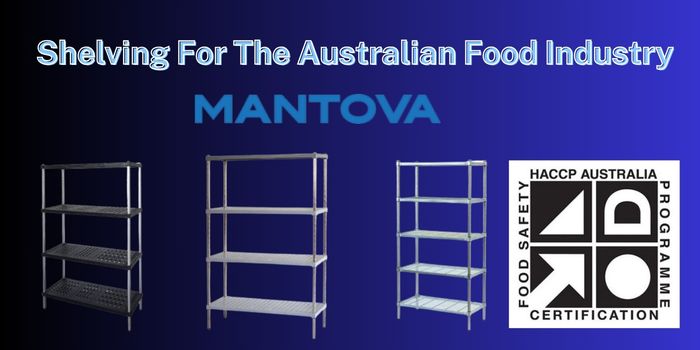
HACCP-approved shelving plays a critical role for businesses that follow Hazard Analysis and Critical Control Point principles. This shelving must support easy cleaning, resist bacterial growth, and avoid materials that could contaminate food during storage or preparation. Mantova supplies shelving that aligns with HACCP requirements, helping food businesses maintain consistent compliance throughout council audits and third-party certifications. Choosing HACCP-approved shelving also reduces liability risk and demonstrates a clear commitment to food safety, which builds trust with customers and regulators alike. For processing plants, butcheries, and commercial kitchens across Australia, HACCP-compliant shelving isn’t optional, it’s a fundamental part of responsible food handling.
What to Look for When Buying Shelving
Before purchasing shelving, businesses should check for relevant certifications, including compliance with AS/NZS standards. They should also weigh upfront cost against long-term durability, since cheaper shelving often needs replacement sooner. Custom shelving suits businesses with unique space constraints, while off-the-shelf units suit standard setups. Buyers should also ask suppliers about warranty terms, load ratings, and after-sales support, since these factors affect long-term value. Mantova works directly with food businesses to recommend shelving that matches their specific operational needs, rather than offering a one-size-fits-all solution.
Key Points: Shelving For The Australian Food Industry
- Shelving directly affects food safety compliance under Australian standards.
- Stainless steel suits high-risk, high-moisture food preparation areas.
- Polymer shelving offers a budget-friendly option for dry storage.
- Wire shelving supports airflow in cold rooms and freezers.
- Galvanised steel works well for warehousing and back-of-house storage.
- Load capacity should always match actual stock weight requirements.
- Mobile shelving improves flexibility during cleaning and layout changes.
- Regular maintenance prevents corrosion and bacterial buildup.
- HACCP-approved shelving supports stronger audit outcomes.
- Mantova provides tailored shelving solutions for Australian food businesses of all sizes.
FAQs About: Shelving For The Australian Food Industry
What shelving is best for commercial kitchens in Australia?
Stainless steel shelving remains the top choice for commercial kitchens because it resists corrosion, withstands frequent washdowns, and meets Australian hygiene standards. Mantova recommends stainless steel for any area that handles raw food preparation or frequent cleaning cycles.
Does shelving need to meet Australian food safety standards?
Yes, shelving used in food businesses must meet relevant Food Standards Code requirements and support proper hygiene practices. Auditors check shelving material, cleanability, and structural integrity during routine inspections, so compliant shelving helps businesses avoid penalties.
What’s the difference between wire shelving and solid shelving for cold storage?
Wire shelving allows air to circulate freely, which helps maintain consistent temperatures in cold rooms and freezers. Solid shelving restricts airflow and can create inconsistent cooling, so most cold storage areas across Australia favour wire or chrome units.
Is HACCP-approved shelving a legal requirement in Australia?
HACCP isn’t always mandatory by law, but many councils and industry bodies expect food businesses to follow HACCP principles, especially processing plants and butcheries. Mantova supplies HACCP-aligned shelving that helps businesses meet these expectations confidently.
Where can I buy compliant food industry shelving near Sydney or Melbourne?
Mantova supplies compliant shelving solutions to food businesses across major Australian cities, including those near Sydney’s CBD and Melbourne’s hospitality precincts. Businesses can contact Mantova directly to discuss shelving options suited to their location and operational needs.
How often should food industry shelving be cleaned?
Most commercial kitchens clean stainless steel shelving daily, while dry storage shelving typically needs cleaning weekly or as spills occur. Regular cleaning schedules reduce contamination risk and help businesses stay audit-ready year-round.
Conclusion
Choosing the right shelving protects food safety, supports compliance, and improves daily efficiency for Australian food businesses. From cold rooms near Sydney Airport to busy kitchens close to landmarks like the Royal Botanic Gardens, the right shelving setup makes operations run smoother and safer. Mantova stands ready to help businesses across the country find shelving solutions that match their specific needs, whether that means HACCP-compliant units, custom configurations, or standard stainless steel ranges.
For tailored advice, businesses can contact us directly to speak with the Mantova team about shelving options suited to their premises. As one of the leading Mantova Shelving Distributors in Australia, Mantova supports food businesses nationwide with reliable, compliant, and durable shelving solutions built to meet the demands of busy commercial environments.